
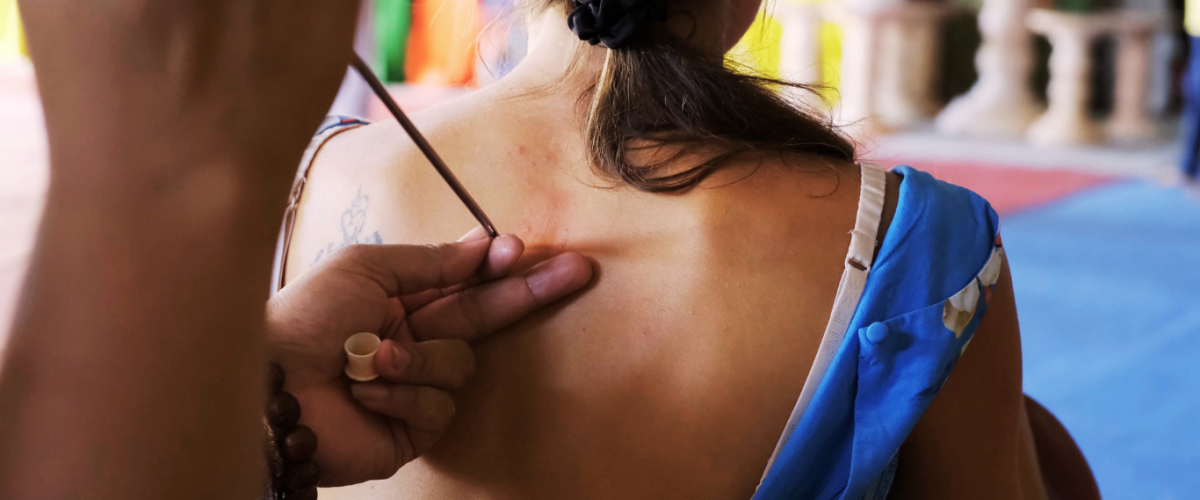
Sak Yant: much more than a tattoo
In recent years, Sak Yant tattoos have become a trend among travelers and celebrities. But its meaning goes beyond aesthetics. It is a spiritual practice with centuries of history, a ceremony of protection and energy guided by the Buddhist and animist tradition of Thailand and Cambodia. We tell you where the true value of Sak Yant lies and how to approach this experience with respect.
What exactly is a Sak Yant?
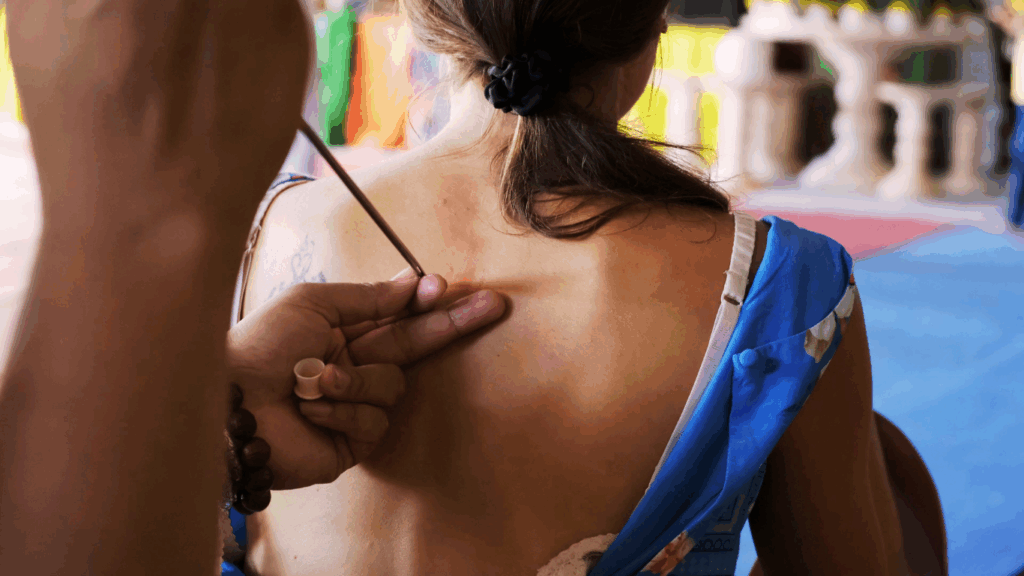
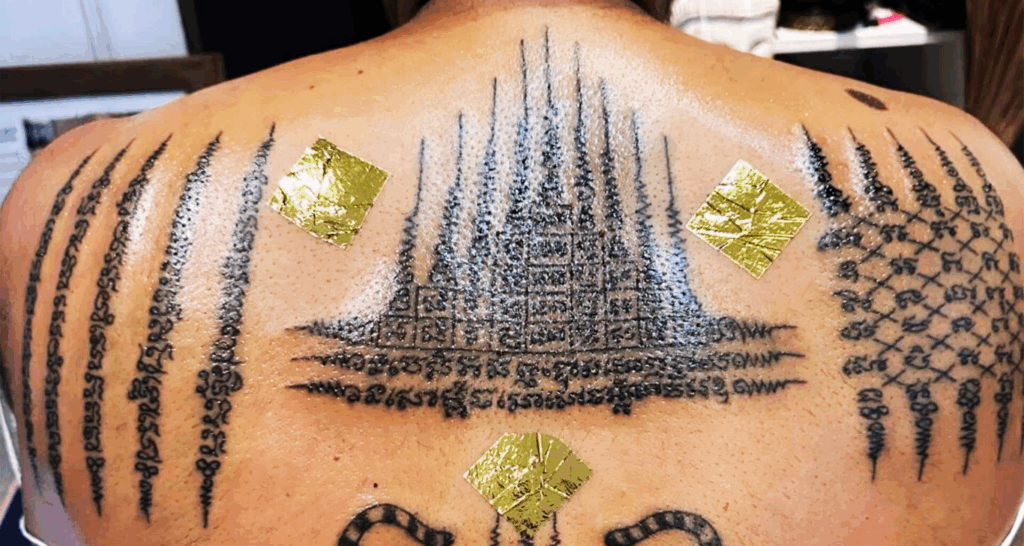
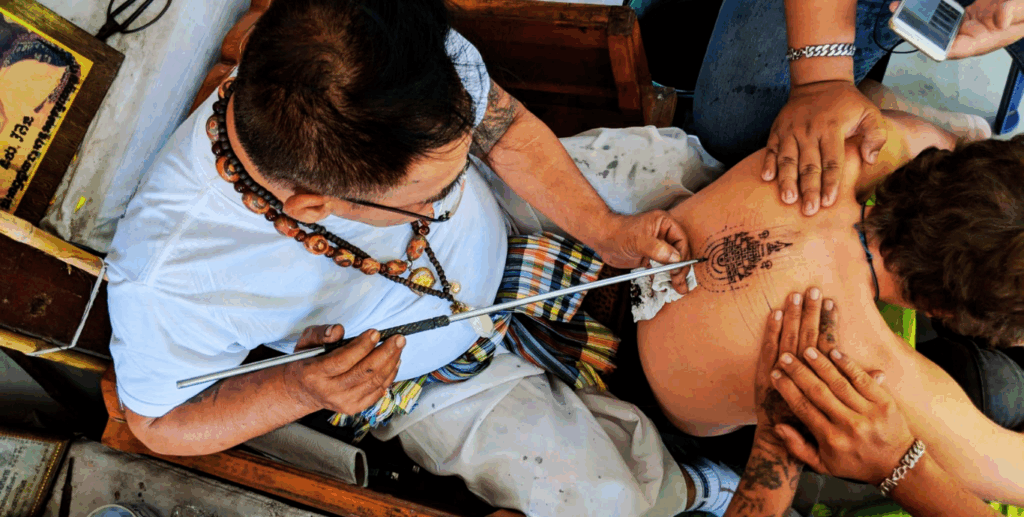
The word “Sak” means tattoo, and “Yant” comes from “Yantra”, sacred geometric figures with Pali or ancient Khmer script. Each design has a purpose: protection, bravery, luck, attraction, or even the ability to speak in public.
Most importantly, it is not just about the image. The tattoo is activated by a blessing, a chant and a breath of the monk or ajarn who performs it. Without this ceremony, it is just a drawing.
Tradition and true masters
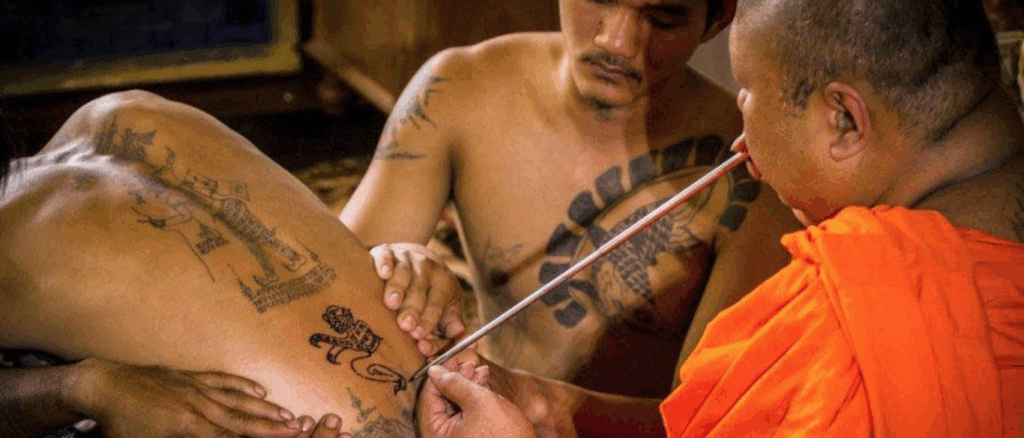
For centuries, Thai warrior monks wore these tattoos as protection amulets. Today, the Sak Yant are still part of a living tradition, passed down from master to apprentice.
Many lay ajarns, former monks with spiritual training, continue to practice this tradition. Places like the Wat Bang Phra temple, near Bangkok, are a reference for their authenticity and respect for the ritual.
Ethics, commitment and respect
Receiving a Sak Yant also implies accepting certain rules of conduct. Some designs involve commitments such as avoiding lying, being faithful to your partner or not consuming drugs. It is not necessarily religious, but it does imply a spiritual responsibility.
Therefore, it is important to avoid tourist sites that offer them as a simple commercial product. There is no blessing, no purpose. And, sometimes, there is not even hygiene.
If you are interested in a Sak Yant, get informed, connect with the tradition and choose well where and with whom. This experience can mark your skin, but also your way of seeing the world. And that, without a doubt, is the deepest journey you can make.
 English
  Spanish