
TIPS THAT YOU SHOULD KNOW IF YOU TRAVEL TO THAILAND AND SOUTHEAST ASIA
When you visit destinations such as Thailand, Laos, Cambodia, Vietnam and Myanmar with Asian Spirit, you not only travel in space and time, but you are transported to another culture and different customs. Respect and integration will be key to fully enjoy, not only the natural and architectural beauty, but also the cultural harmony. If you are preparing your trip to Southeast Asia we tell you the things to remember, prepare and avoid once you are there.

1. Respects their Religion and Sacred Places
- Buddhism is the predominant religion in Thailand, Laos, Cambodia and Myanmar, while in Vietnam, Buddhists, Catholics, Confucianists, Taoists and many other minorities coexist with popular beliefs. In these countries, temples are places of great spiritual importance and it is essential to show respect when visiting them.
- Proper Dress: Always cover your shoulders and knees when entering a temple. In many places, you are also required to remove your shoes before entering. Carry a scarf or sarong with you to cover yourself if necessary.
- Removing footwear: As a general rule, do not enter temples with footwear. This rule also applies to homes, some stores and offices. Most Asians understand that footwear that has been accumulating dirt from the streets should not stain spaces that are respected and lived in.
- Behavior in temples: Keep a low tone of voice and do not interrupt worshippers while they pray. Show respect to the Buddha image and never point at it with your feet, we explain below why. Although in the West the Buddha image is popularly accepted as decoration, in tattoos, printed on T-shirts, etc. it is not for many people in Asia, as it is not considered polite.
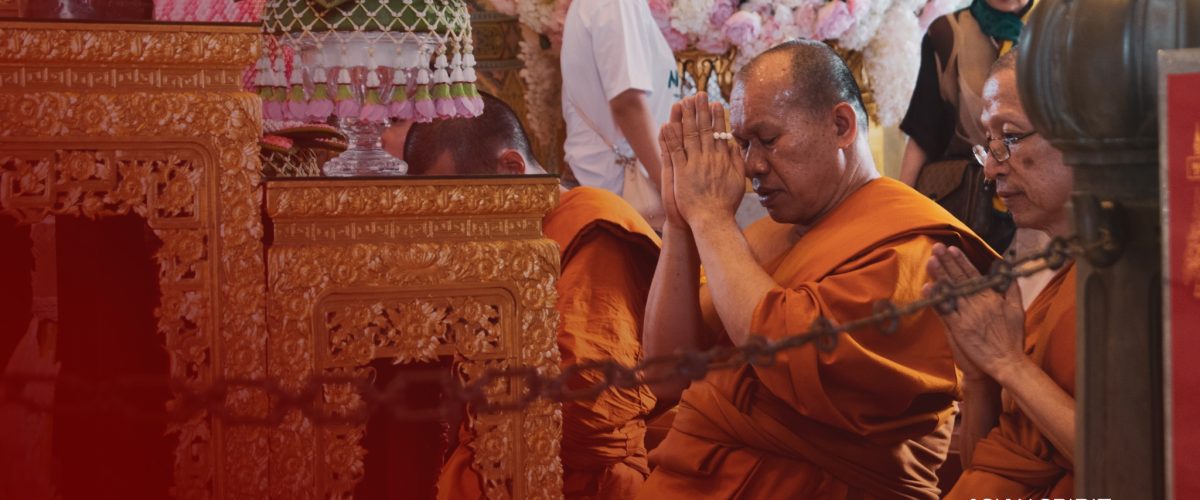
- Buddhist monks: the figure of monks is very present in Thai, Burmese, Laotian and Cambodian life, especially. They are revered by Asian Buddhists. It is even common practice for men to spend three months in a monastery living austerely, meditating and studying. As Buddhist monks are not allowed physical contact with women, it is a sign of respect to keep your distance in the presence of a monk.
Tip: Before entering a temple or establishment, look for shoes at the door, do what you see and you will not make any false steps. If you visit Thailand, the official Tourism Thailand site offers detailed guides on how to behave in temples and sacred places.
2. Table and Dining Etiquette
Food customs in Southeast Asia can be quite different from those in the West, and adapting to them can enrich your culinary experience.
- Thailand and Laos: Es común compartir varios platos entre todos en la mesa. Usa la cuchara y el tenedor, pero recuerda que el tenedor nunca se lleva a la boca; su función es ayudar a colocar la comida en la cuchara.
- Vietnam: Meals are usually served with multiple dishes to share. It is customary for the host to serve the food on the guests' plate as a gesture of hospitality. Accept this gesture with gratitude.
- Myanmar: Food is traditionally eaten with the right hand, as the left hand is considered unclean. Always wash your hands before eating.
- Bottled water: in all Southeast Asian countries it is not recommended to drink tap water, always remember to drink bottled water to avoid bacteria that your body is not used to. If you are one of those who carry an insulated bottle with you, it will be a great advantage to always have fresh water at hand.
Tip: In all these countries, avoid leaving food on your plate as a sign of respect for the food and those who prepared it.
3. The Importance of Wai and Other Greetings
In Thailand, Wai is the traditional form of greeting, which involves placing the palms of the hands together in prayer and making a slight bow of the head. It is a gesture of respect that is used in a variety of situations, from greeting someone, to showing gratitude or apologizing.
- When to Do It: Always respond with a Wai if someone does it first, especially if it is an older person. However, foreigners are not expected to master this practice to perfection, but making the effort is greatly appreciated.
- In Cambodia and Laos: Similar gestures exist in Cambodia (known as Sampeah) and Laos. Learning and practicing these greetings will help you connect better with the locals.

4. Behavior in public
Southeast Asia has a conservative culture in many respects, and what may be acceptable in the West may not be acceptable here.
- Affection in Public: Excessive displays of affection in public, such as kissing or hugging, are frowned upon in many Southeast Asian countries, especially in Thailand and Myanmar.
- Control Your Emotions: Staying calm and not losing your temper is essential. Raising your voice or showing anger publicly is frowned upon, especially in Thailand, where the culture of “sabai sabai” (tranquility) is highly valued.
- Don't point with your feet: The feet are the lowest part of the body and as such, it is disrespectful to point with them. Likewise, when sitting, try not to show the soles of your feet and do not walk at a height where your feet are in line of sight with anyone.
- Do not touch your head: the head is considered the most sacred and cleanest part of the body. It can be a spontaneous gesture of affection in the West, especially towards children. Remember that in Southeast Asia it may be considered disrespectful.
Tip: especially in floating markets, where you walk along the sidewalks of the canals at the head height of the boat vendors, remember not to expose your feet too much and avoid being too close to their heads and faces.
5. Photograph with respect
Capturing the beauty of Southeast Asia in photos is tempting, but it is crucial to do it with respect.
- People: Always ask permission before photographing people, especially in rural areas or when photographing monks and worshippers in temples.
- Sacred Places: Some temples and religious sites have restrictions on photography, especially indoors. Always look for signs or consult with locals before taking photos.
6. Transit and transportation rules
Getting around Southeast Asia is quite an experience, but it also involves adapting to local rules that may be quite different from what you are used to.
- Motorcycles and Scooters: In countries such as Vietnam and Thailand, motorcycles are the most common means of transportation. If you decide to rent one, make sure you always wear a helmet and follow local traffic laws.
- Tuk-Tuks and Taxis: Negotiate the price before getting into a tuk-tuk or cab or make sure it has a working taximeter, especially in tourist cities such as Bangkok or Siem Reap.
- Traffic and pedestrians: Forget about the supposed pedestrian priority at crosswalks and even when the traffic light is red for vehicles. Never assume that drivers will yield to you because, although in recent years a lot of work has been done to raise awareness of the vulnerability of pedestrians, road traffic in big cities is king.
Tip: In Thailand, you can check rates and advice on the use of local transport on the official Tourism Thailand.
7. RESPECT NATURE AND WILDLIFE

Southeast Asia is famous for its biodiversity and breathtaking natural landscapes. It is essential that travelers respect the environment to preserve these wonders for future generations.
- National Parks: Follow the rules to the letter, do not leave trash and respect the local flora and fauna. Some animals and plants are sacred or protected.
- Beaches and Oceans: Avoid using non-ecological sunscreens, as many contain chemicals that damage corals. In some places, such as the islands of Thailand, there are campaigns to protect coral reefs and marine life.
Tip: Check out local conservation initiatives such as the Wildlife Foundation of Thailand to find out how you can contribute during your visit.
Traveling in Thailand and Southeast Asia with Asian Spirit will allow you to immerse yourself in vibrant cultures rich in tradition. By following these etiquette tips, you will not only show respect for the countries you visit, but also enjoy a more authentic and meaningful experience. Remember that being a conscious and respectful traveler not only enhances your experience, but also helps preserve cultures and the environment for future visitors.
Prepare your bags and enjoy a trip full of respect and adventure in the heart of Southeast Asia!
 English
  Spanish